
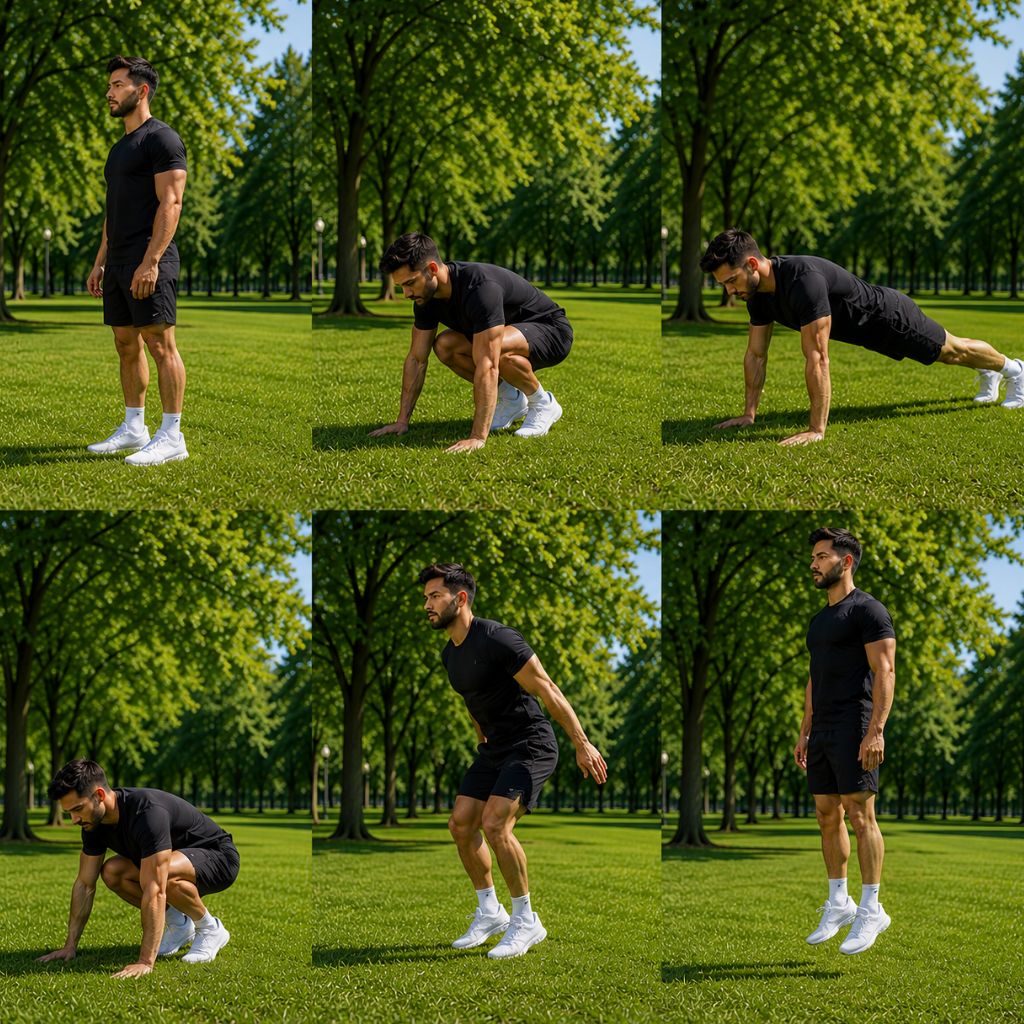
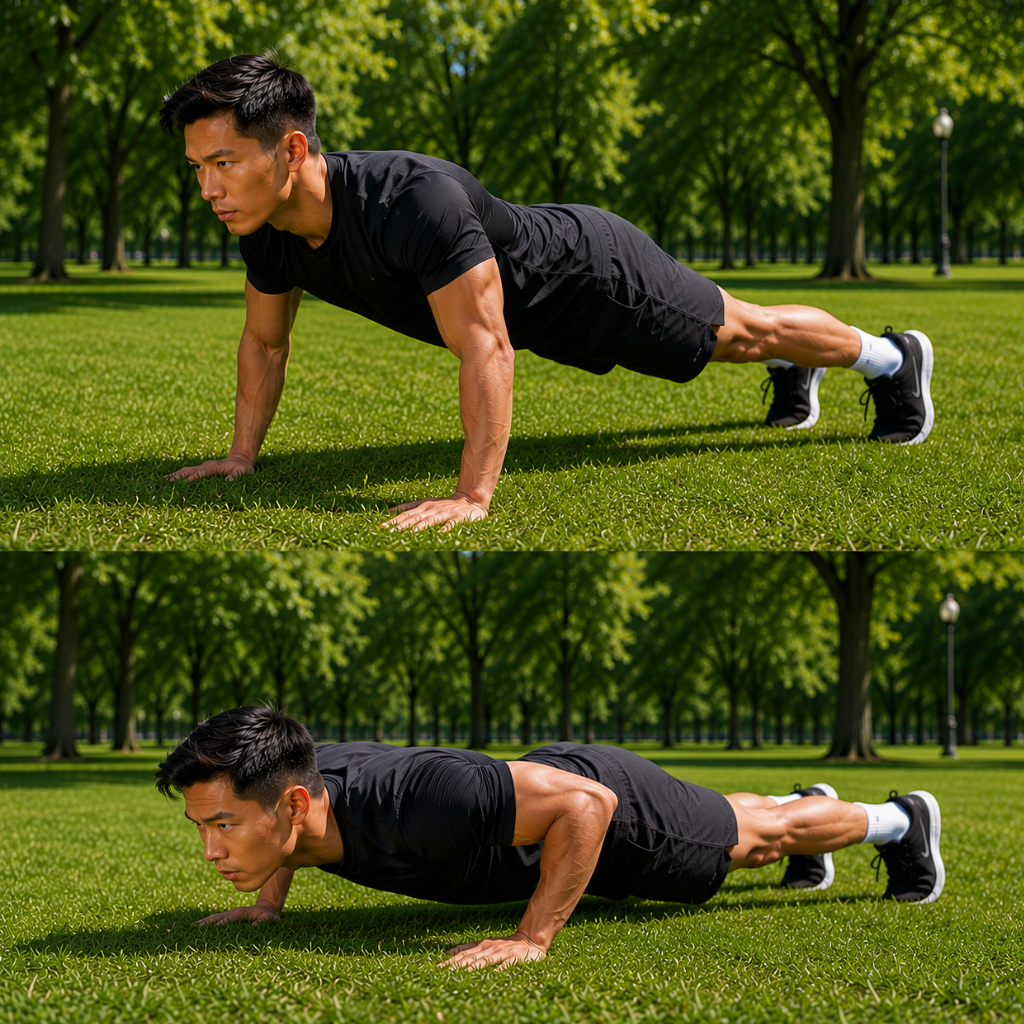
Burpees look simple — which is exactly why they’re so easy to butcher. The difference between a burpee that builds real full-body fitness and one that just grinds down your joints or wastes your effort comes down to a handful of small, fixable mistakes. Here are the ten almost everyone makes, and the quick fix for each.
New to the move? Start with our guide on how to do burpees. Already getting aches? Our deep dive on pain-free burpee technique has you covered. This list is the fast tune-up.
1. Skipping the warm-up
Jumping straight into burpees with cold wrists, hips and shoulders is asking for strain. Fix: spend two to three minutes raising your temperature first — arm circles, hip openers, a few squats (NHS).
2. Rounding the lower back
Bending from the spine to reach the floor loads your lower back rep after rep. Fix: hinge at your hips and bend your knees, keeping your back flat as your hands come down.
3. Letting the hips sag in the plank
When your core switches off, your hips drop and your lower back takes the hit. Fix: brace your core and squeeze your glutes so your body forms one straight line. If they still sag, widen your stance.
4. Placing your hands too far forward
Reaching your hands out in front piles pressure onto your wrists. Fix: plant them directly under your shoulders and spread your fingers. Sensitive wrists? Make fists or use an incline.
5. Cutting the range short
Half-standing at the top or barely dipping into the plank robs the burpee of its effect. Fix: hit a full plank each time, and stand up completely — extend your hips at the top before the next rep.
Guided pace, cleaner reps.
GreenReps guides you through short bodyweight workouts — from 10 to 60 minutes, whatever your day allows. No gym, no equipment. Just press start.
6. Landing like a sack of bricks
Crashing down onto straight legs or your heels sends impact straight to your knees. Fix: land softly on the balls of your feet with your knees bent and tracking over your toes.
7. Trading form for speed
Racing the clock until your technique falls apart turns a great exercise into a sloppy, risky one. Fix: move only as fast as you can stay clean. Five solid reps beat fifteen messy ones.
8. Holding your breath
Breath-holding spikes your effort and gasses you out fast. Fix: keep a steady rhythm — exhale as you push up or stand, inhale on the way down. Smooth breathing keeps you going longer.
9. Doing too many, too soon
Ego volume on day one leads to deep soreness and dropped streaks. Fix: build up gradually and keep some days lighter — lingering aches are a signal, not a badge (ACSM, 2015). More on training every day without burning out.
10. Never scaling the burpee
Grinding the same version forever means it’s either too hard (form breaks) or too easy (no progress). Fix: scale down on tough days — step back, skip the jump, use an incline — and scale up as you improve by adding a push-up or a higher jump.
The one habit that fixes most of these
Slow down and watch yourself. Filming a single set on your phone reveals rounded backs, sagging hips and short range instantly — things you can’t feel in the moment. Fix one mistake at a time, and clean form quickly becomes automatic.
In short
- Most burpee problems are form, pace, or dosage — not the exercise.
- Warm up, hinge don’t round, brace the plank, hands under shoulders, full range.
- Land soft, breathe steadily, and choose quality reps over speed.
- Build volume gradually and scale the move up or down to fit the day.
Want to put clean reps on repeat? A 30-day challenge is a simple way to make good form a habit.
Frequently asked questions
Going too fast until form collapses. Chasing rep speed is where rounded backs, sagging hips and hard landings all creep in. Slowing down just enough to stay clean fixes several mistakes at once and actually makes the exercise more effective.
Watch for joint pain (wrists, knees, lower back), gasping for breath after just a few reps, or feeling your hips drop in the plank. The fastest check is to film one set on your phone — most form faults are obvious on video even when you can’t feel them.
Controlled beats fast, especially while you’re learning. Once your technique is solid you can pick up the pace for a bigger cardio hit, but never at the cost of form. Clean, full-range reps deliver more benefit than a blur of sloppy ones.
It depends on your level, but a good rule is: if your form breaks down or soreness lingers into the next days, you did too many. Build up gradually rather than maxing out early — consistency over weeks beats one punishing session.
Yes. Step-back or incline burpees keep most of the full-body benefit with far less joint stress. A clean scaled burpee is always better than a sloppy “full” one — scale to match your body and the day, then progress as you get stronger.