
Few things in fitness carry as much folklore as stretching. Stretch before training or you’ll get injured. Never stretch before training or you’ll lose strength. Stretch afterwards or you’ll be sore. Most of it is half-remembered advice from a PE teacher, and a surprising amount of it is simply wrong. The honest picture is more relaxed: stretching is a useful tool for a specific job, it’s not the injury insurance it’s sold as, and how you stretch matters more than whether you do it before or after. Here’s the differentiated version — static versus dynamic, before versus after, and seven myths checked against the evidence.
What stretching actually does
When you stretch regularly, you gain range of motion. What most people don’t know is why. In the first weeks, the change is mostly in your nervous system, not your tissue: your body learns to tolerate a deeper position without hitting the brakes. You feel “longer” because your stretch tolerance went up. Structural changes in the muscle and tendon do happen, but slowly and with consistent work over months. That’s worth knowing, because it explains a lot of what follows: stretching changes how far you can comfortably move, and it does very little else — for better and for worse.
The main types of stretching
Static stretching
You move into a position and hold it, typically 15 to 60 seconds: the classic hamstring stretch, the hip flexor lunge, the calf against a wall. Passive static stretching uses gravity, a hand or a strap to hold you there; active static stretching uses the opposing muscle — lifting your leg and holding it up with your own hip flexors. Static stretching is the most effective way to increase range of motion over time, it’s low-risk, and it’s calming. It’s also the type that all the “loses strength” debates are about, which we’ll get to.
Dynamic stretching
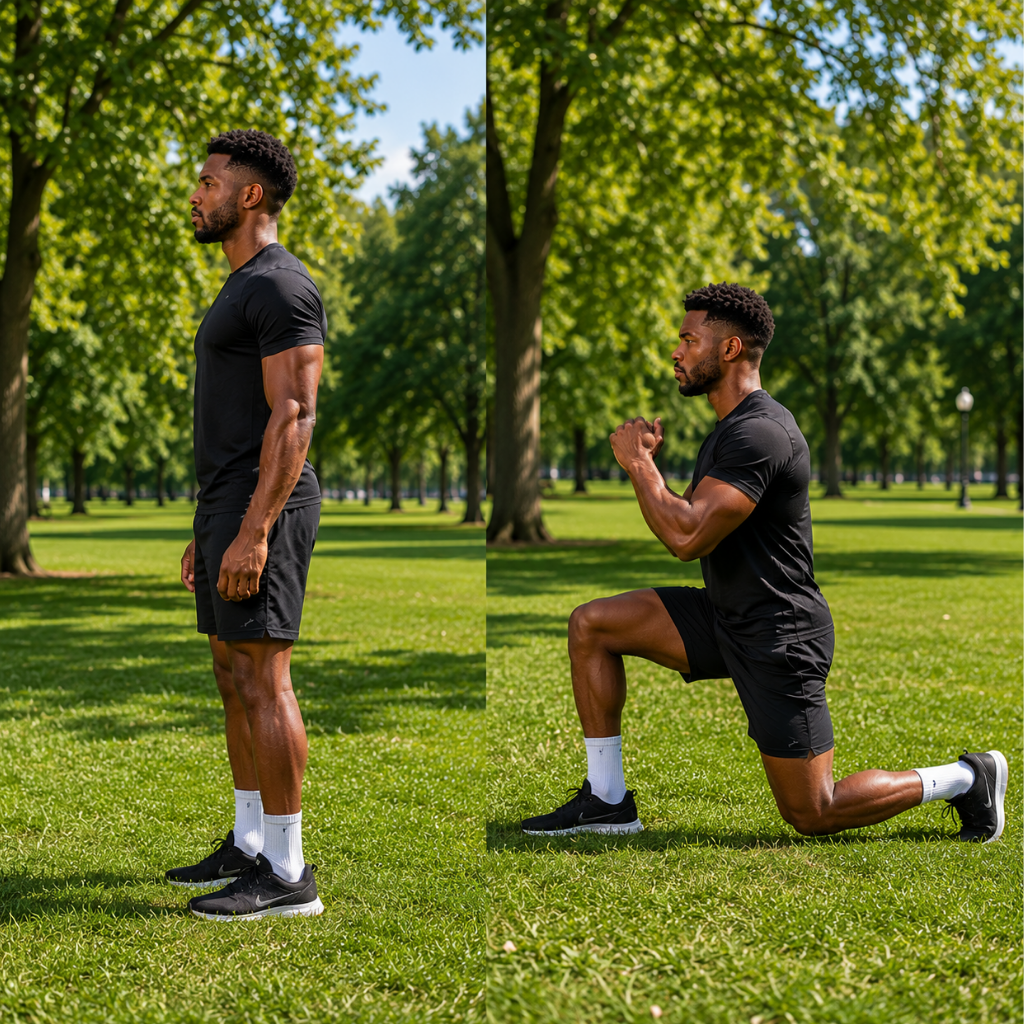
Controlled movements through your full range, repeated 8 to 12 times rather than held: leg swings, walking lunges with a reach, arm circles, hip openers, inchworms. Dynamic stretching raises muscle temperature, rehearses the movement pattern you’re about to do and wakes up your nervous system. It’s the right warm-up for almost any training session, and the evidence says it slightly improves performance rather than hurting it.
Ballistic stretching
Bouncing at the end of your range to push further — the old-school toe-touch bounce. It uses momentum instead of control, gives you little you can’t get from dynamic stretching, and is the one type where the “you can hurt yourself” warning is fair. Skip it unless you’re an athlete with a specific reason.
PNF and contract-relax
Proprioceptive neuromuscular facilitation sounds intimidating and is simply this: stretch, contract the stretched muscle against resistance for a few seconds, relax, move deeper. It’s very effective for range of motion and popular in physiotherapy. Like static stretching, it reduces force output briefly afterwards, so it belongs after training or in a separate session, not before.
Strength through full range: the type nobody calls stretching
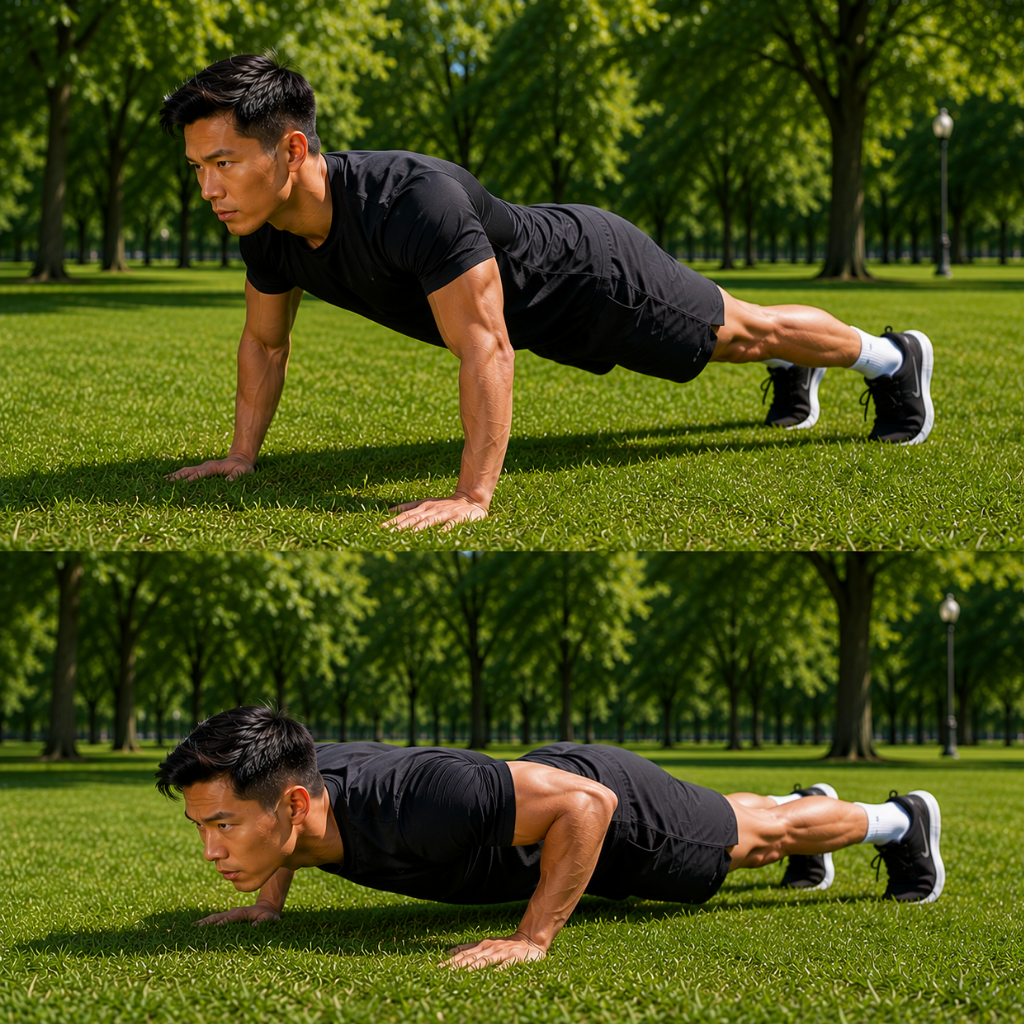
Here’s the part that matters most for anyone training with their body weight. A meta-analysis comparing strength training with stretching found no significant difference in range-of-motion gains between the two (Afonso et al., 2021). A deep squat trains your ankle and hip mobility. A pike push-up stretches your hamstrings and calves on every rep. A long lunge opens your hip flexors under load. If you train through your full range with control, you are already doing much of your “stretching” — and building strength in those positions at the same time, which static stretching doesn’t.
Before or after training?
The short answer: dynamic before, static after or separately — and the timing matters far less than people think.
- Before training: three to five minutes of dynamic movement that resembles what you’re about to do. If a specific movement needs range you don’t have — say, a deep squat with a tight hip — a short static hold of 15 to 30 seconds is fine, as long as you move dynamically afterwards. Long static holds right before maximal or explosive work are the one thing to avoid.
- After training: static stretching is safe and pleasant here, your tissue is warm, and it’s a decent way to wind down. Just don’t expect it to prevent soreness — more on that below.
- Separately: if flexibility is a real goal — you want a deep squat, a full pike, an overhead position without arching your back — the most effective approach is a few dedicated sessions per week, or stretching in the evening while you’d otherwise be on your phone. Range of motion responds to consistency, not to timing.
Warm up, move, done.
GreenReps guides you through short bodyweight workouts — from 10 to 60 minutes, whatever your day allows. No gym, no equipment. Just press start.
Seven stretching myths, checked
Myth 1: “Static stretching before training robs your muscles of strength”
Verdict: a real effect, massively overblown. This one has a kernel of truth. A systematic review of over 100 studies found that static stretching reduced performance measured immediately afterwards by about 3.7 percent on average, PNF by 4.4 percent — while dynamic stretching improved it by 1.3 percent (Behm et al., 2016). But the dose matters enormously: holds of 60 seconds or more per muscle group produced a 4.6 percent deficit, holds under 60 seconds only about 1.1 percent — a difference you would never notice in a bodyweight session. An earlier review came to the same conclusion, with stretches under roughly 30 to 45 seconds showing no meaningful decrement (Kay & Blazevich, 2012). The effect also fades within minutes, especially once you do some dynamic movement afterwards. So: if you’re a sprinter about to race, don’t hold a two-minute hamstring stretch on the start line. If you’re about to do push-ups in the park, a few short holds change nothing.
Myth 2: “Stretching prevents injuries”
Myth 3: “Stretching increases your injury risk”
Verdict on both: the evidence is a shrug. A large meta-analysis of 25 trials with over 26,000 participants looked at which exercise interventions prevent sports injuries. Strength training cut injuries to less than a third; proprioception training helped too. Stretching was the one measure with no significant preventive effect (Lauersen et al., 2014). So no, stretching is not injury insurance — being strong is. There’s a fair nuance: the Behm review notes that pre-exercise stretching may reduce muscle strain injuries specifically in sports with sprinting and rapid changes of direction. For everyday bodyweight training, that’s a marginal case.
The reverse claim — that stretching causes injuries — has even less behind it. Sensible stretching in healthy people is remarkably safe. The three situations where caution is fair: aggressive static stretching of a cold muscle, ballistic bouncing at the end of your range, and long holds right before maximal or explosive effort. Avoid those and the risk conversation is over.
Myth 4: “Stretching afterwards prevents sore muscles”
Verdict: no. This is the most tested and most clearly busted myth on the list. A Cochrane review pooled twelve randomised trials and found that stretching before, after, or both reduced delayed-onset muscle soreness by about one point on a 100-point scale — statistically detectable, practically nothing (Herbert et al., 2011). Soreness comes from the training stimulus, especially from eccentric work, and it goes away as your body adapts to it. Stretch afterwards if it feels good. Just don’t do it to avoid tomorrow’s stairs.
Myth 5: “You have to stretch to become flexible”
Verdict: false. As covered above, strength training through a full range of motion improves flexibility as much as stretching does (Afonso et al., 2021). Deep squats, lunges, pike push-ups, hanging from a bar — done with control at the end of your range, these are mobility training with a strength bonus. If you hate stretching, you have a genuine alternative. If you like it, do both.
Myth 6: “Stretching lengthens your muscles”
Verdict: mostly not, at least not quickly. The early gains from stretching come from your nervous system allowing more range, not from longer muscle fibres. Tissue does adapt with months of consistent work, but if you stretch for three weeks and feel looser, that’s your brain, not your hamstrings. Which is fine — it still means you move better. It just also means the gains fade if you stop.
Myth 7: “Stretching is pointless, then”
Verdict: also false. Overcorrecting is just as lazy as the original myth. Stretching does exactly one thing very well: it increases the range you can move through comfortably. If a deep squat, a clean overhead position or a full pike is limited by tightness, stretching fixes that, and consistently. Many people also simply feel better after it — calmer, less stiff after a day at a desk. Those are real reasons. “Prevents injury” and “prevents soreness” are not.
At a glance: which type, when, how long
| Type | When | How long | Good for |
|---|---|---|---|
| Dynamic | Before training | 3–5 min, 8–12 reps per movement | Warm-up, movement prep, slight performance boost |
| Static (short) | Before, only if a movement needs the range | 15–30 s per muscle, then move | Unlocking a position for the session |
| Static (long) | After training or separately | 30–60 s, 2–3 rounds | Range of motion over time, winding down |
| PNF / contract-relax | After or separately | Hold – contract 5 s – relax, 2–3 rounds | Fast range gains, rehab |
| Strength through full range | Every session | Your normal reps, full depth, controlled | Flexibility plus strength in that range |
| Ballistic | Rarely | — | Specific athletes only |
A practical routine that fits a life without a gym
- Before a session (3–5 minutes): leg swings, walking lunges with an overhead reach, hip circles, inchworms, arm circles, a few slow bodyweight squats. That’s your warm-up. Something like our 5-minute morning workout doubles as one.
- During the session: use your full range with control — the lowering phase of every rep is a stretch under load. If you’re unsure what that means, our guide to contraction types explains why the eccentric phase does so much.
- After (optional, 5 minutes): two or three static holds of 20 to 30 seconds on whatever feels tight — hip flexors, chest, calves. Breathe out into the stretch. This is for you, not for your recovery numbers.
- If flexibility is a goal: two or three short dedicated sessions per week, holds of 30 to 60 seconds, a couple of rounds per position. Guidelines for general fitness suggest stretching most major muscle groups two to three days a week to a point of tightness, not pain. Consistency beats intensity — every time.
In short
- Dynamic before, static after or separately — but timing matters far less than consistency.
- Static stretching before training costs strength only with long holds before maximal effort. Short holds change nothing for a bodyweight session.
- Stretching doesn’t prevent injuries or soreness. Strength training does prevent injuries; nothing much prevents soreness.
- Stretching also doesn’t cause injuries, unless you bounce cold muscles or hold long stretches right before explosive work.
- Full-range strength work improves flexibility as much as stretching. Deep squats and pike push-ups count.
- Stretch because it gives you range and feels good — those are the honest reasons, and they’re enough.
Want a session where the warm-up and the full-range work are already built in? Start with how to do burpees properly — one movement, whole body, deep squat included.
Frequently asked questions
Before a workout, use dynamic stretching: controlled movements through your range like leg swings, lunges and arm circles, for three to five minutes. Save longer static holds for after the session or a separate flexibility session, when your tissue is warm and a brief dip in force output doesn’t matter. If a movement needs range you lack, a short 15-to-30-second static hold before is fine as long as you move dynamically afterwards.
Slightly and briefly, and only with long holds. Reviews find an average performance drop of around 3 to 4 percent immediately after static stretching, driven mostly by holds of 60 seconds or more; holds under 30 to 45 seconds show no meaningful effect. The dip fades within minutes, especially after dynamic movement. For a bodyweight session it’s irrelevant; for a maximal sprint or jump right afterwards, keep static holds short or skip them.
For range of motion, 30 to 60 seconds per position, two or three rounds, to a point of noticeable tightness but not pain, most days you can manage. Before training, keep holds to 15 to 30 seconds. Guidelines for general fitness suggest around 60 seconds total per muscle group per session, two to three days a week. Regularity matters more than any single hold.
If you warm up dynamically and train through your full range of motion with control, largely yes. Research shows strength training through a full range improves flexibility as much as stretching does, and stretching itself doesn’t prevent injuries or soreness. The exceptions: if a specific movement is limited by tightness, or if you simply feel better when you stretch, dedicated stretching is worth your time.
Not meaningfully. A Cochrane review of randomised trials found that stretching before or after exercise reduced delayed-onset muscle soreness by about one point on a 100-point scale — too small to notice. Soreness is a normal response to a new or harder training stimulus and fades as you adapt. Light movement, sleep and simply repeating the training help more than any stretch. Stretch afterwards if it feels good, not as a cure.